
Introduction
The banking sector is undergoing a transformation in the provision of its services worldwide. Technology and process automation have improved the customer experience and increased the efficiency and profitability of financial institutions. In this article, we will review the most important trends in the transformation of the sector and their impact on the Dominican Republic. These trends bring significant challenges and cultural changes to organizations that, if not strategically managed, can result in a loss of market share and even obsolescence.
 1. Mobile and Digital Banking - Mature and Demanding Users: Customers are increasingly using applications to check balances, transfer funds, make payments, and manage their financial planning. This trend is expected to continue as it allows customers to perform banking transactions and access financial services anytime and anywhere.
In the Dominican Republic, there has been an increase in the availability and use of online and mobile banking applications and services (ranging from 60% to 65% of the population), including digital customer onboarding, account opening, transfers, bill payments, and other transactions. The digitization of onboarding processes has shown very positive results in terms of agility, customer experience, and employee satisfaction, as experienced in one of our recent implementations of digital tools and processes in a financial institution in the country.
The number of internet banking users has increased from 1.4 million in 2014 to 5.9 million in 2022[1]. Additionally, 45.6% of transactions in multiple banks are conducted through online banking and mobile applications. For savings and loan associations, the percentages are 16.2% and 13% for savings banks and credit banks, respectively[2]. Interactions with this type of banking have increased in proportion to the maturity of digital consumers, who demand more advanced solutions, explore new products, experiment with various providers, and opt for fast, easy, and flexible access to their funds.
 2. Digital Payments: In Latin America, consumers often face informal economies and fluctuating currencies, which is why digital wallets offer a secure and convenient alternative to using cash. Governments are beginning to realize this, and the interest in digital payment options is expected to continue growing. As merchants and consumers seek safer and more convenient payment alternatives, companies will continue to develop solutions that guarantee unique and seamless experiences. Along these lines, there is an increase in the use of debit and credit cards, as well as mobile and online payments, leading to increased competition among banks to offer digital payment services.
In the Dominican Republic, a dynamic, modern, secure, and reliable payment ecosystem has been created based on the Payment System Regulation issued by the Monetary Board. There has been a significant increase, compared to 2020, in transactions conducted through alternative channels, with bill and service payments (33%), appointment and queue management (7%), card activation and deactivation (4%), tax payments (4%), beneficiary management (4%), statement generation (4%), and ATM withdrawals (4%) being the most notable.
 3. Neobanks: New banking customers want to have their financial products and services on their smartphones. Neobanks, which have a technological foundation and different business and operational models, are gaining ground in Latin America, and now the Dominican Republic is joining the trend with the launch of its first digital bank: Qik by Grupo Popular. The country has been working on adapting regulations to digital processes, from digital customer onboarding and identity validation to electronic signatures for digital transactions and the definition of remote service processes for all customer interactions.
A neobank is characterized by its existence in a mobile app, simple and cost-efficient processes (which translates into more benefits for customers), use of non-face-to-face channels (app, chat, and phone), without the need to visit branches. Among the products they can offer is the "infoless" credit card (an attribute that makes it impossible to clone) with zero issuance and renewal costs, savings accounts, loans, e-wallets, payments, investments, remittances, among others. Likewise, they can integrate tools for personal finance management.
 4. Cibersecurity: The rise in online banking usage brings an increase in concern for transaction security. Banks are adopting measures to prevent cyber attacks, such as multifactor authentication for online banking and biometrics, such as facial recognition and fingerprint technology, for devices. The technical and operational capabilities of banks are becoming more sophisticated for monitoring, detecting, and managing security incidents using technologies like artificial intelligence and machine learning for identifying suspicious transactions and fraud, as well as behavioral analysis and device recognition for theft detection. Another growing issue is "Social Engineering," in which banks respond by educating their customers to avoid falling victim to issues like phishing and/or vishing.
In the Dominican Republic, a series of actions are being taken to strengthen the cybersecurity and information security of all regulated entities in order to contribute to the protection of the country's payment system platforms. These actions include the implementation of the Cybersecurity and Information Security Regulation and the creation of the Sectoral Cybersecurity Incident Response Center for the Financial and Payment Sector (SPRICS), whose objective is to support in mitigating the effects and spread of possible cybersecurity events. It currently has 80 connected participants: banks, stock market, and payment system administrators. It is expected that Central Banks of Central America, with whom the Dominican Republic operates the regional payment system (SIPA), will also be interconnected soon.
 5. Artificial Intelligence and Machine Learning: Banks are adopting these technologies to improve operational efficiency and decision-making. They can help automate repetitive tasks, detect fraud patterns, and improve customer segmentation. Another strategy being adopted in banking is using customer/segment-level data to understand product penetration and profitability. At V2A, we have experience building product recommendation systems for cross-selling and measuring customer and segment profitability, achieving good results for commercial and business areas. This trend aligns with the concept of hyper-personalization, where the challenge lies in the efficient handling and processing of customer data and information to offer personalized financial solutions. To overcome this challenge, financial institutions are relying on Big Data and Artificial Intelligence to efficiently identify, process, filter, and segment information. Banking must harness the power of hyper-personalization and begin to offer the types of experiences that their customers expect, thanks to companies like Apple, Spotify, and Meta.
 6.Financial Inclusion: The advancement of digitization, internet usage, and smartphone adoption are being used to increase levels of banking and financial health. In the Dominican Republic, efforts are being made in this regard through the promotion of financial services to segments of the population that do not have access to traditional banking services. Recently, the National Financial Inclusion Strategy was launched, with action lines supported by technology, the construction of digital payment ecosystems, and inclusive financial education, as this is considered a key enabler in the fight against poverty and the country's economic growth. In this sense, the monetary and financial authority of the country has also issued regulations to regulate microcredits, banking subagents, digital onboarding, and risk management.
 7. Proliferation of Fintechs: There has also been an increase in the number of fintechs and startups offering financial services. In 2018, there were 20 financial technology companies, while by 2022, 50 of these entities were already operating in the local market[3], providing services in segments such as payments, personal and business finance management, alternative financing, financial assets, and capital markets, among others. Some of the prominent companies of this type in the Dominican Republic recently are: RexiFinanzas (financial product buyer), MeSuma (an application that intelligently and securely organizes all banking information), YOYO (mobile application for payments via WhatsApp or QR code), Mio (an app that provides tools for payment, purchase, collection, sending, and receiving money from mobile devices), Goweb (technology solutions ecosystem for independent professionals and SMEs), Pali (digital loan platform), among others.
 8. Open Banking - Expansion and Impact: Open banking refers to the collaboration between banks and fintechs to share customer financial information (with prior authorization) and offer innovative financial services. By establishing regulations that favor the implementation of open banking, financial institutions are opening up their systems through APIs to allow access to their data and offer additional services to their customers. This can improve the customer experience by providing greater freedom of choice and access to financial services.
In the Dominican Republic, the Department of Innovation and Financial Inclusion of the Superintendence of Banks is working on an open banking initiative with the aim of implementing regulations that promote the creation of simple, fast, and personalized financial products and services according to the users' needs through the use of new channels and technologies. This project includes gathering all the information about the financial sector, its needs, knowledge, and strengths regarding open banking, and culminates in the development of regulations for its implementation in the Dominican Republic.
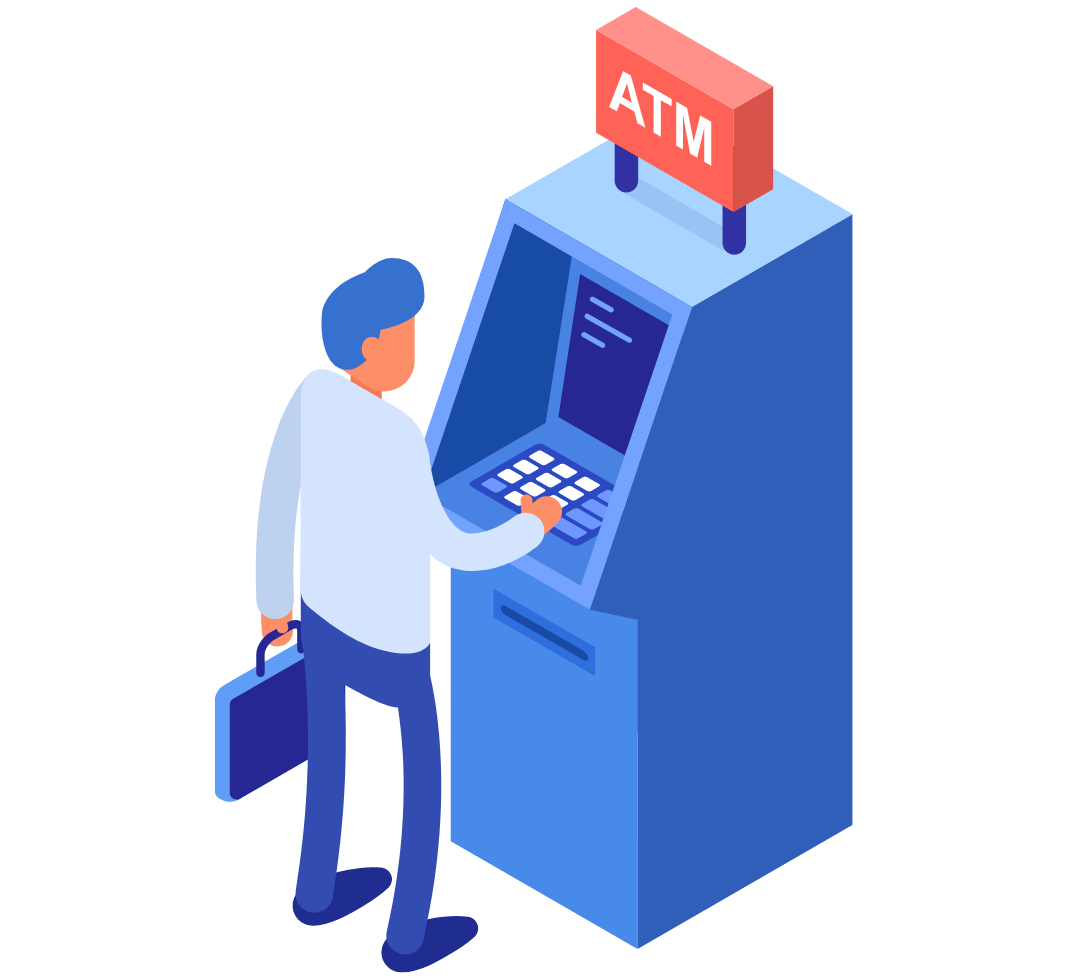 9. New Branch and ATM Strategies: The strategy is being redefined to test new ways of providing financial services to customers without the need to invest in opening many branches:
- Pop-up offices, which can be mobile and provide service in new locations as well as remote or smaller population centers.
- "Next-generation" branches, with personalized 24/7 assistance through automated systems and video banking.
- White-label branches, where different institutions offer financial services to customers belonging to any of them.
- Consolidation of ATMs, where banks can share networks of ATMs operated by a third party.
Navigating Times of Change
We understand that these trends should lead financial institutions to step forward, prepare to "play" in this new context, and respond to the challenges to come. The key will be the banking industry's ability to incorporate new technologies with agility, across all channels, in a secure manner, and with an unbeatable user experience.
These movements will result in unprecedented changes in organizational culture, and those institutions that effectively manage them will emerge successfully from these times of digital transformation. At V2A, we fully understand the organizational challenges and seek to help our clients navigate these transformations through various methodologies for operational improvements, process digitization, channel optimization, and change management, tailored to the needs of each organization. For more information about the services we offer, please visit our website at https://v2aconsulting.com/.
Fuentes y Notas
[1] Conference "Regulatory Trends in Digital Banking, Information Security, Cybersecurity, and Financial Innovation (Innovation Hub)" - Governor of the Central Bank at the XXII Latin American CLAB Congress
[2] Digitalization Ranking of Dominican Banking 2021 - Superintendence of Banks
[3] Conference "Regulatory Trends in Digital Banking, Information Security, Cybersecurity, and Financial Innovation (Innovation Hub)" - Governor of the Central Bank at the XXII Latin American CLAB Congress
Sources:
Revista Byte
Auriga – The Banking e-volution
Superintendencia de Bancos de la República Dominicana
Banco Central de la República Dominicana
Disclaimer
Accuracy and Currency of Information: Information throughout this "Insight" is obtained from sources which we believe are reliable, but we do not warrant or guarantee the timeliness or accuracy of this information. While the information is considered to be true and correct at the date of publication, changes in circumstances after the time of publication may impact the accuracy of the information. The information may change without notice and V2A is not in any way liable for the accuracy of any information printed and stored, or in any way interpreted and used by a user.